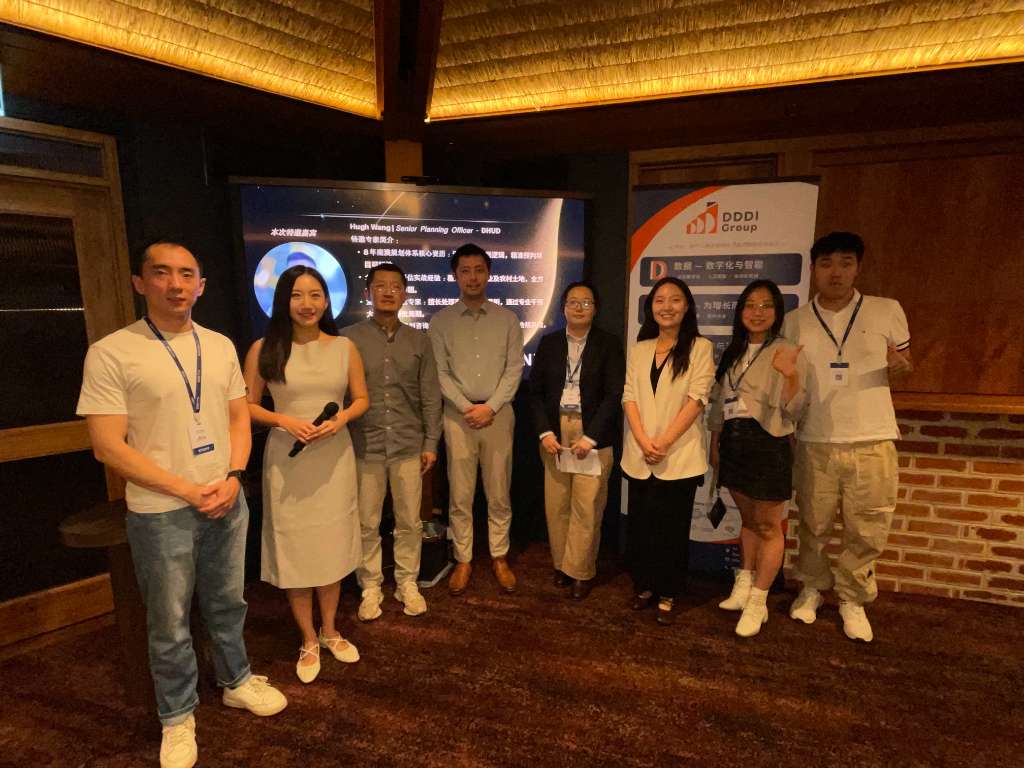
Event Recap | Australian Property Development Sharing Session Successfully Concludes, Exploring Planning, Design and Innovation Across the Full Project Lifecycle
Key Takeaway: Successful property development is rarely determined by one discipline alone. Accelerating development and unlocking land value requires a full-lifecycle approach that connects planning strategy, architectural value, policy incentives, and market-driven project coordination.
31 March 2026 — Held at the Arkaba Hotel in Fullarton, South Australia. Featuring contributions from Ignition Research, EDGESIS Design and Cyberate Project Management.
Thank you to all guests, speakers and industry partners who joined us for the event. The Australia Property Development Sharing Session, featuring contributions from Ignition Research, EDGESIS Design and Cyberate Project Management, was successfully held on the evening of 31 March 2026 at the Arkaba Hotel in Fullarton.
With the theme “Understanding the Core Logic of Planning, Design and Innovation to Accelerate Development Across the Full Project Lifecycle”, the session explored some of the key factors influencing project efficiency, development costs and land value across planning, architectural design, policy incentives and project coordination.
By bringing together speakers from different professional disciplines, the event aimed to help developers and industry participants look beyond individual stages of a project and better understand property development from a full-lifecycle perspective — including how stronger planning, design and cross-disciplinary coordination can contribute to better project outcomes.
Key Dimension
Core Insights & Focus Areas
Speaker & Organisation
1. Planning Approvals
Policy frameworks across residential/commercial/rural, complex DAs, early risk mitigation
Hugh Wang
DHUD
2. Architectural Design
Scale, orientation, layout efficiency, responding to site controls & cost-to-value balance
Louis Tian
EDGESIS Design
3. Policy & R&D
R&D Tax Incentive (R&DTI), identifying technical challenges in construction/energy & governance
Joy Fang
Ignition Research
4. Project Coordination
Multi-consultant alignment (surveyors/planners/arborists), market data & return perspective
Bo Cui
Cyberate PM
1) Planning Approvals: Improving Project Certainty Through a Better Understanding of Policy
Hugh Wang, Senior Planning Officer at DHUD, shared insights drawn from his experience within South Australia’s planning system, focusing on the key considerations that developers should address during the early stages of a project.
Sector Assessment: His presentation covered planning assessment across residential, commercial and rural developments, as well as some of the challenges associated with more complex development applications.
Early Risk Mitigation: A stronger understanding of planning policies, assessment requirements and regulatory frameworks can help project teams identify potential risks earlier, improve the quality of development applications and reduce uncertainty before progressing into later design and delivery stages.
2) Architectural Design: Understanding How Design Creates Value
Louis Tian, Founding Partner at EDGESIS Design, presented on “How Design Defines Architectural Value”, exploring the relationship between design decisions and overall development value.
Beyond Material Selection: Louis highlighted that architectural value is shaped by far more than material selection alone. Building scale, natural light, orientation, spatial organisation and layout efficiency can all influence both the functionality of a development and its eventual market appeal.
Intelligent Site Response: Effective design is therefore not simply about increasing project expenditure. It is about responding intelligently to site conditions, planning controls and project objectives to find the most appropriate solution within practical cost and development constraints.
Long-Term Asset Value: By returning to the fundamentals of each design challenge, development teams can achieve a better balance between cost efficiency, usability and long-term asset value.
3) Policy and R&D Innovation: Identifying Potential Value Within Development Costs
Joy Fang, Director of Ignition Research, presented on “Capturing Policy Incentives and Recovering Development Costs”, examining how property and construction businesses can view certain project activities through the lens of government policy and research and development.
R&D Tax Incentive (R&DTI): The presentation introduced the potential application of Australia’s R&D Tax Incentive to eligible R&D activities and discussed how businesses can strengthen their approach through better R&D planning, documentation, compliance processes and governance frameworks.
Technical Roadblocks as Innovation: Joy also shared examples from construction and renewable energy projects to demonstrate how technical challenges encountered during development may, in certain circumstances, form part of a structured innovation process when they are appropriately identified, tested and documented.
Unlocking Value: For development businesses, this creates an opportunity to look beyond the question of how much a project costs and consider whether particular technical activities may also carry innovation value or align with relevant government support programmes.
4) Project Coordination: Defining Good Design from a Return Perspective
Bo Cui, Project Coordinator at Cyberate Project Management, presented on “Defining Good Design from a Return Perspective”, exploring how design decisions can be assessed from both project management and investment perspectives.
End-to-End Coordination: The presentation covered coordination across the development process, from site assessment and concept design through to planning preparation, including collaboration with consultants such as surveyors, planners and arborists.
Evidence-Based Positioning: A key focus was the importance of connecting design decisions with market evidence and investment objectives. Using market data and comparable transactions to inform design and product positioning can help development teams improve saleability while maintaining a stronger focus on project returns.
Approval Success: Project examples also demonstrated how design adjustments and multidisciplinary coordination can help address planning constraints and support more effective approval outcomes.
From Individual Disciplines to Full-Lifecycle Collaboration
Successful property development is rarely determined by one discipline alone.
Planning conditions influence design possibilities. Design decisions affect costs, usability and market value. Technical innovation may create opportunities to access relevant policy support, while project management brings these different considerations together around a common development objective.
This was one of the key messages of the session: effective property development requires a full-lifecycle approach that connects planning, design, innovation, market considerations and project delivery.
Once again, we sincerely thank everyone who attended the event and our guest speakers for sharing their professional knowledge and practical experience.
Looking ahead: Ignition Research will continue to collaborate with partners across the property, construction, project management and professional services sectors to deliver practical industry events covering property development, government policy, R&D innovation, project cost optimisation and business growth. Through further cross-disciplinary collaboration, we hope to provide the Australian property industry with more practical, structured and forward-looking insights.
This article provides a summary of industry event proceedings for informational purposes only. It does not constitute formal planning, architectural, taxation, legal, or investment advice. Specific development projects should be evaluated based on their own site conditions and professional advice.
Working on a project like this?
Tell us what you're building and the part you're not sure will work. A researcher from our Adelaide team (registered Research Service Provider RSP000047) reads every enquiry and replies within two business days. No documents needed.