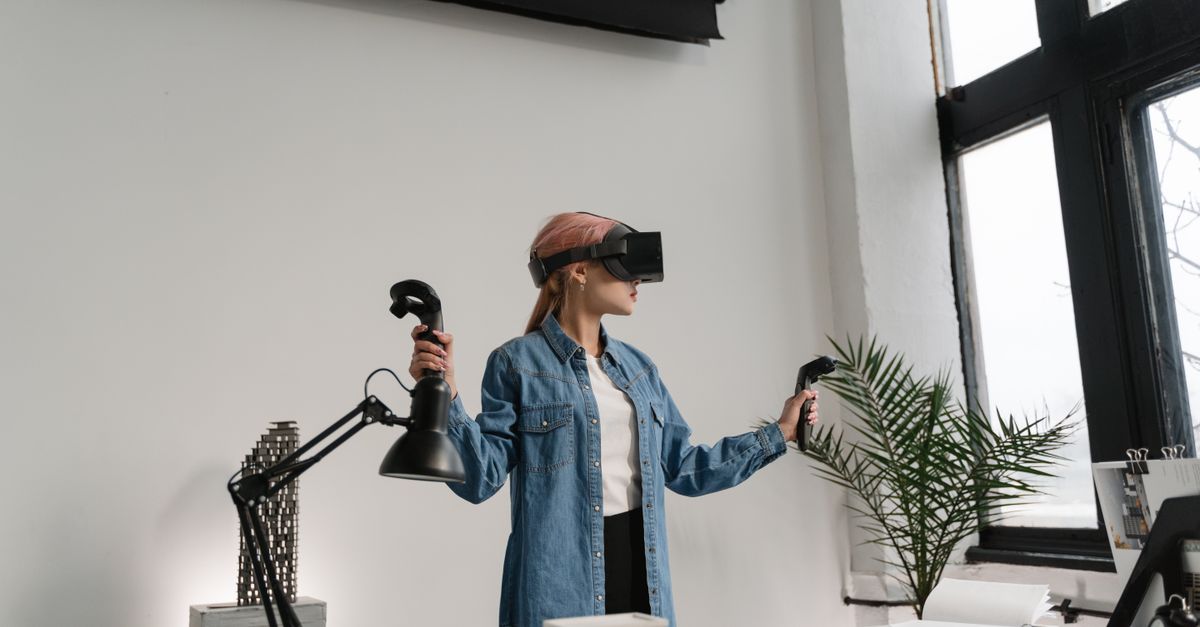
Quick answer: Putting a design review in a headset does not usually make the meeting a core R&D activity: inspecting a model and identifying issues are ordinarily outcomes determinable in advance, so on those facts a review is generally unlikely to be a core R&D activity, subject to the activity's own facts and the statutory tests in s 355-25 of the ITAA 1997. Core R&D may instead sit in experimental work resolving a genuinely unknown technical limit — achievable concurrency, fidelity or latency — where the outcome could only be determined by a systematic progression of work conducted for the purpose of generating new knowledge. The review itself may be a supporting R&D activity only where it is directly related to a genuine core activity and, where required, conducted for the dominant purpose of supporting it. Eligibility is self-assessed.
7 August 2026 — this article describes the current rules. The 2026–27 Federal Budget announced proposed R&DTI reforms for income years starting on or after 1 July 2028. Until any amendments take effect, the R&DTI continues to be administered under the current legislation.
An Adelaide engineering practice buys headsets, loads the federated model, and puts twelve people — six at Lot Fourteen, four in Sydney, two at the client's Perth office — inside the building six months before it exists. Someone spots a maintenance access clearance nobody had noticed on a 2D section. The session is valuable, the technology is new to the firm, and the invoice is large.
A core R&D activity is an experimental activity whose outcome could not be known or determined in advance on the basis of current knowledge, information or experience, and could only be determined by applying a systematic progression of work that is based on principles of established science and proceeds from hypothesis to experiment, observation and evaluation and leads to logical conclusions, and which is conducted for the purpose of generating new knowledge (business.gov.au). Applied to a routine VR design review, the relevant technical outcomes may often be determinable in advance where established platforms and methods are being used.
This article is about multi-user immersive collaboration and design review. Live augmented-reality overlay, digital-twin synchronisation and automated interpretation of scans and point clouds are dealt with separately in our Insights.
A Design Review Is a Coordination Event
A design review exists to surface and resolve issues in a specific project so the project can proceed, and the mechanism by which it produces value — people look at a model and notice things — is understood in advance. Changing the display device from a projector to a head-mounted display changes the ergonomics of noticing. It does not create an outcome that could only be determined by experiment.
The work surrounding a VR review has the same character: converting the federated model, decimating geometry, baking materials and lighting; rigging navigation, measurement and mark-up tools from the platform's own toolkit; configuring rooms, avatars and permissions; facilitating sessions and writing issues into the clash register. These activities are generally implementation where established tools and methods allow a competent professional to determine the relevant technical outcome in advance. Our page on what does not qualify covers the general position; the immersive version is that novelty of the medium is not the novelty the legislation asks about. Immersive safety induction, plant familiarisation and client walkthroughs sit in the same place: routine authoring of immersive training, induction or familiarisation content is generally implementation where the technical outcome can be determined in advance and the activity is not directed to generating new knowledge.
Where the real question is "does immersive review reduce coordination time, rework or RFI volume across our projects?", a further limit applies. Section 355-25(2) of the ITAA 1997 lists categories that cannot be core R&D activities at all, and management studies or efficiency surveys is one of them; a benchmarking exercise comparing VR review against conventional review sits close to it and is worth testing against it. The same subsection also excludes market research, market testing and market development, which matters if the "trial" is really a pilot to see whether clients like it.
Where the Unknown Can Genuinely Sit
The boundary in immersive work falls where a required technical capability's achievable performance was unknown — not resolvable by reading documentation, benchmarking a vendor or asking a competent practitioner — and could only be determined through the required systematic progression of work, supported by an appropriate documented evaluation approach. AusIndustry's software development sector guide draws the same distinction between building a system and resolving a technical unknown within it. The established-science limb bites here more than teams expect: an iterative tune-and-retest loop in an engine editor can be perfectly disciplined and still fall short, because the progression has to rest on principles of established science — rendering, distributed systems, human factors — and proceed from a stated hypothesis about why a limit binds, rather than from adjusting settings until the numbers improve.
Streaming, culling, level-of-detail selection and distributed-consistency algorithms are established and documented; applying them is engineering. What can be open is where the envelope lies for a given combination — whether a specified visual fidelity, geometric accuracy and interaction latency hold together for a specified number of concurrent editors on that class of model and hardware, and what fails first when they do not. Comfort under a stated motion and framerate budget can be open the same way, with two cautions: work about which interface people prefer is closer to a preference study than a technical experiment, and human-participant research may also raise ethics, consent and privacy requirements that sit outside the R&DTI entirely.
Often closer to core R&D
Usually not core R&D
Establishing whether a stated fidelity and latency target is attainable for many concurrent users on a federated model too large to load whole
Optimising a scene until it runs acceptably using documented techniques
Determining whether a consistency guarantee holds under simultaneous multi-user editing within a specified latency budget
Enabling multi-user mode and assigning permissions in a commercial platform
Testing whether a comfort threshold is achievable under a specified motion and framerate budget, measured against a pre-set criterion
Choosing a locomotion style because the team found it more pleasant
Systematic work to resolve an unknown in streaming or synchronisation that vendor documentation and competent practice could not answer
Model conversion, authoring, session facilitation and issue write-up
"Nobody at our firm had done it" describes a skills gap rather than a gap in knowledge. The test refers to what can be determined on the basis of current knowledge, information or experience generally, not the claimant's experience — so contemporaneous records of the prior-knowledge assessment can help show why the outcome could not be known or determined in advance, while the experimental records help demonstrate the systematic progression of work. We take the same line on our software and AI page.
Evidence for Concurrency, Latency and Fidelity Experiments
AusIndustry expects records created at the time showing that activities met the eligibility requirements (business.gov.au). In immersive collaboration, useful contemporaneous records may include:
The artefacts: A scripted session harness — a replayable navigation and mark-up sequence driven by synthetic clients — because for latency, frame-rate and consistency measurements a human-run session cannot be repeated identically and so cannot be compared across trials. For human-factors work, the evaluation design should be appropriate to the hypothesis and sufficiently controlled and documented to support meaningful comparison. Depending on the study, useful records may include the protocol, participant and exposure conditions, the measures used and any material changes during the study, together with any applicable ethics, consent or privacy documentation. Per-frame telemetry: frame times, dropped-frame counts, an edit-propagation latency histogram rather than a mean, and the network conditions in force. A model manifest recording the source federation, its hash and the decimation parameters that produced the runtime asset. A dated hardware and firmware inventory.
Where the experiment starts and stops: Two dated records anchor it: the one stating the unknown, the measure and the result that would count as failure, and the one reporting the evaluation against that measure. They are evidence landmarks, not an eligibility boundary — a date does not determine what an activity is. Work after the second record is often implementation, but later verification can still be experimental where it resolves a further unknown against a measure set in advance, and work before the first can be a supporting activity where it is directly related to the core activity. Each activity is assessed on what was actually done, for what purpose, and how it relates to a core activity.
What gets versioned: Headset OS and firmware, the platform or engine SDK, the decimation settings, the network profile and the scripted session itself all move the numbers, and a result that cannot be tied to a specific version of each is not reproducible by the team that produced it.
Three failure modes recur: Firmware and driver drift between trials silently changes frame timing, so results weeks apart are not comparable unless versions were pinned. The wrong latency gets measured — motion-to-photon frame time is not end-to-end edit propagation, and the second is what a concurrency proposition is usually about. And mixed time goes unallocated, because the same engineer authors Thursday's client model and instruments the trial on the same day. How that time is treated in a claim is a matter for the company and its registered tax agent.
Supporting Activities and the Dominant-Purpose Limb
The connection to a core activity is built item by item, while the work happens, not asserted at the end of the income year. In practice that means contemporaneous records should provide a reasonable basis for showing how particular preparation, instrumentation or session activities relate to the relevant core R&D activity. Trial identifiers, task codes or similar methods may be useful ways to do this. It means separating the client-delivery baseline from the experimental increment: the model that would have been authored and the review that would have been held on one side, the additional decimation variants, the instrumentation build and the synthetic-client rehearsal on the other. And it means recording purpose and time allocation against that identifier at the time, by the person who did the work, rather than reconstructing it later.
Against that record the statutory test can be applied. An activity that is not core may qualify as a supporting R&D activity where it is directly related to a core R&D activity. Where the activity is of a kind referred to in s 355-25(2), produces goods or services, or is directly related to producing goods or services, it must in addition be conducted for the dominant purpose of supporting the core activity (business.gov.au).
The production-related limb may be relevant in immersive programmes. Where a particular model-preparation, session-delivery or facilitation activity produces, or is directly related to producing, goods or services, the additional dominant-purpose test applies if that activity is being assessed as supporting R&D. A session stood up to run a designed trial is a different proposition from a client review that happens to generate a log file. A client-delivery session that would have run for the project anyway produces a dual-purpose evidence problem: the same hours, the same model and the same telemetry serve both the project and the trial, and nothing in the record separates them. An RSP may assist with experimental design, technical R&D work and contemporaneous supporting records within the research fields for which it is registered. Records can also help distinguish the technical experimental work from surrounding delivery activities.
A Hypothetical Worked Example
Illustrative only — a hypothetical, not a ruling, and not a statement that any of it would be eligible.
An engineering consultancy runs distributed reviews on a federated hospital model, 310 million triangles as issued, decimated to a 9 million triangle runtime asset. Baseline, measured 12 February: On the commercial platform, six concurrent users on standalone headsets hold 72 fps with 90th-percentile edit-propagation latency of 140 ms; at twelve users latency reaches 610 ms and framerate falls to 51 fps in dense plant rooms.
The unknown and the search: The vendor documents concurrency to eight users and is silent above it. Published material on distributed consistency covers the algorithms but not their behaviour on a decimated federation of this density on mobile-class GPUs.
The proposition, dated 19 February: Twenty concurrent editors, 90th-percentile edit propagation at or below 150 ms, 72 fps sustained across a 45-minute session, and displayed element position within 5 mm of the source model. Below 60 fps, above 300 ms, or a position error above 5 mm, the approach is recorded as failed. All three measures are read over the full 45 minutes.
Held constant & varied: Held constant: Headset model and firmware build, the site network profile, the model hash and decimation settings, and a scripted 15-minute navigation and mark-up sequence replayed identically by synthetic clients, run back to back three times to fill the 45-minute session. Varied: The level-of-detail policy, the streaming strategy and the synchronisation topology.
Trial 1 — failed: Screen-space-error-driven level of detail with aggressive frustum culling. Framerate holds at 72 fps for twenty clients across the 45 minutes, but displayed position error on curved pipe runs reaches 41 mm at the coarsest level, past the 5 mm bound. This ruled out treating the frame budget as the binding constraint: fidelity binds first on this geometry.
Trial 2 — failed: A single authoritative relay for all edits, fidelity fixed at the level that met the 5 mm bound. Latency at twenty clients reaches a 90th percentile of 210 ms and scales with participant count, because every edit fans out from one process. This ruled out the working assumption that the bottleneck lay in the consistency algorithm rather than the topology.
Trial 3: Server authority retained only for element locks and geometry edits; transient pointer, annotation and viewpoint state distributed peer-to-peer with per-region interest management, with fidelity held at the level that met the 5 mm bound in trial 2. Ninetieth-percentile edit propagation at twenty clients, 130 ms.
Evaluation, 2 May: Measured over the full 45-minute session — three replays of the 15-minute script, twenty synthetic clients. Latency within target: 90th-percentile edit propagation 130 ms against the 150 ms measure. Position within target: worst-case displayed element error 3.4 mm, on the same curved pipe runs that failed in trial 1, against the 5 mm bound. Framerate not sustained at target: 72 fps holds for all but two plant rooms of exceptional density, where it falls to 63 fps for roughly eight seconds on entry, on each of the three replays — above the 60 fps failure threshold but below the 72 fps the proposition asked for. Two of the three measures met, one above the failure threshold but short of target, so the proposition is recorded as partially met, with the finding that the binding constraint is per-room geometric density rather than participant count.
Where the boundary falls: The proposition of 19 February and the evaluation of 2 May bracket the experimental work in the record. The twenty project models authored that year, the sixty client review sessions, the safety induction module and the rollout across the practice are separate activities, each assessed on its own facts rather than on where it falls relative to those dates — some of the model preparation done for the trials may be directly related to the core work, while the delivery sessions are ordinary services. Whether any activity here is registered, and on what basis, is for the company to self-assess with its own advisers.
Where an RSP Fits, and the $20,000 Point
AusIndustry describes Research Service Providers as scientific or technical service providers a company can engage to conduct R&D activities on its behalf, registered in specific fields (business.gov.au). Ignition Research is a Registered Research Service Provider (RSP000047) at Lot Fourteen in Adelaide. For immersive work an RSP may assist with experimental design, technical R&D work and contemporaneous supporting records within the research fields for which it is registered. Earlier involvement can help document the technical question, hypothesis and evaluation approach as the work progresses.
Notional deductions for an income year must generally be at least $20,000 (ATO) — and qualifying expenditure incurred to a non-associate RSP may still form part of the offset where total notional deductions are below the usual $20,000 threshold, via the substituted base in s 355-100(2) of the ITAA 1997, which covers expenditure to a non-associate RSP for services in a field for which it is registered together with eligible CRC Program contributions. Using an RSP does not guarantee eligibility — you still self-assess. See claiming R&D under $20,000.
Offset rates, the intensity tiers and which entities access the refundable offset are set out on refundable vs non-refundable offset.
Frequently Asked Questions
Q: Is a VR design review meeting eligible for the R&D Tax Incentive?
A: It is generally unlikely to be a core R&D activity, subject to the activity's own facts and the statutory tests. A design review's outcome — that participants will inspect the model and identify issues — is ordinarily determinable in advance on the basis of current knowledge, information or experience, and the review is not usually conducted for the purpose of generating new knowledge. Changing the display device does not change that. You self-assess.
Q: Is building a multi-user VR collaboration tool R&D?
A: Configuring or integrating a commercial platform is generally unlikely to be a core R&D activity. A core activity may exist in the narrower part where a required technical capability's achievable performance could not be known or determined in advance on the basis of current knowledge, information or experience — for example whether a stated fidelity and latency target holds for many concurrent users on a federated model too large to load whole — and could only be determined through the required systematic progression of work using an appropriate documented evaluation approach.
Q: Is developing VR training or induction content claimable?
A: Producing immersive training or induction content is generally unlikely to be a core R&D activity, because the outcome is expected before the work begins. It may potentially qualify as a supporting R&D activity where it is directly related to a core R&D activity and, where the additional test in s 355-30(2) applies, is conducted for the dominant purpose of supporting that core activity.
Q: Our firm had never built multi-user VR before — is that enough?
A: No. The test refers to what can be determined on the basis of current knowledge, information or experience, not one organisation's experience. If a competent professional in the field could have determined the outcome from published material or vendor documentation, it was determinable. The search done beforehand, and why it left the question open, is part of the record.
Sources & Further Reading
legislation.gov.au — Income Tax Assessment Act 1997 — Div 355, incl. ss 355-25, 355-30 and 355-100
Related: R&D for property and construction · R&D for software and AI · what does not qualify · what an RSP is · claiming R&D under $20,000 · refundable vs non-refundable offset · R&D Tax Incentive in Adelaide
Talk to Ignition Research if you are planning smart-building, predictive-maintenance or building-controls experimental work and need technical R&D support. As a Registered Research Service Provider based at Lot Fourteen in Adelaide, we assist property groups, infrastructure owners and building-technology companies with experimental design, technical R&D work and contemporaneous supporting records within our registered RSP scope. We do not determine R&DTI eligibility or provide tax advice: your company self-assesses and remains responsible for its own claim, with tax advice and lodgement handled by your tax adviser. Get in touch.
This article is general information from a Registered Research Service Provider about the R&D Tax Incentive. It is not tax, legal or financial advice; eligibility depends on your circumstances and you should self-assess and seek your own advice.
Working on a project like this?
Tell us what you're building and the part you're not sure will work. A researcher from our Adelaide team (registered Research Service Provider RSP000047) reads every enquiry and replies within two business days. No documents needed.